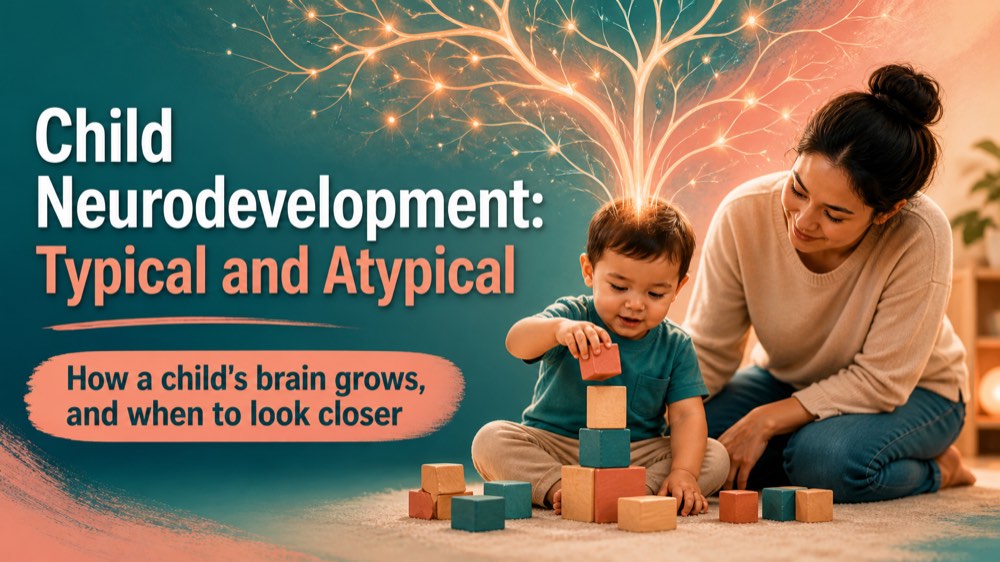
Child Neurodevelopment: Typical and Atypical
How a child's brain builds itself, from birth to about six, and how to tell a child who is simply on their own schedule from one who needs a closer look. The course starts with the brain under construction, neurons, synapses, pruning and myelin, and with plasticity: why early experience matters so much, and why the idea that a window slams shut forever at age three is a myth. It then walks through the milestones parents and teachers actually watch, motor, language, social-emotional and thinking skills, as ranges, not deadlines, using the CDC's 2022 checklists. It names the warning signs worth acting on, above all any loss of a skill a child already had, and explains how screening and evaluation work, who does them, and why an early evaluation costs little and waiting can cost a lot. It presents the neurodevelopmental conditions as DSM-5-TR describes them, autism, ADHD, intellectual disability, dyslexia and other learning disorders, developmental coordination disorder, with honest numbers, and it clears away the myths that still circulate: vaccines do not cause autism, sugar does not cause ADHD, bilingual homes do not cause language delay. It closes with what helps: early intervention, therapies ranked by evidence rather than by marketing, the family's role, inclusive school and the rights that protect the child. For parents, caregivers and educators. Educational content, it does not diagnose and does not replace a health professional.